
A radiation shielding door is more than an entry point—it’s an integral part of your facility’s radiation protection. For many facilities, the challenge of installing shielding doors lies in balancing rigorous safety standards with operational efficiency. In this guide, AVM Group is here to break down the technical variables to consider during the radiation shielding door specification process to help educate you on what it takes to ensure your facility remains compliant, safe, and functional.
Table of Contents
ToggleWhy Door Specification is Critical for Shielding Integrity and Safety
In radiation shielding, accuracy is never optional. The shielding door can be the most vulnerable part of a vault, and this is why measurements, calculations, and the physics of the project need to be carefully taken into account during specification and construction. Important aspects to consider during the shielding door selection process include:
- The door must provide the same level of protection as the walls of the vault. If your vault uses high-density concrete, the door must match that attenuation using lead, steel, or composite materials.
- Because these doors can weigh thousands of pounds, the foundation, the drive system, and the overall architectural footprint all must meet code requirements for safety and compliance.
- The door design is a direct output of a physics report. Whether it’s a linear accelerator or an NDT (Non-Destructive Testing) room, the energy levels will dictate the thickness, overlap, and material composition of the door needed for the room.
- The door’s placement in relation to the radiation source, i.e., direct shot vs. scattered energy, will also influence the thickness and overlap of the door with the walls.
- Since door assemblies typically use metal and lead—which are excellent for attenuating gamma and X‑ray radiation but perform poorly against neutrons—additional neutron shielding is required. Hydrogen‑rich materials such as polyethylene or concrete are needed to slow (moderate) neutrons before they can be effectively absorbed.
Types of Shielding Doors
The right door type for your facility is most often determined by spatial constraints and how the door will integrate into your facility’s daily workflow. Facilities can utilize a two-door setup, including an operator door that is usually standard-sized for personnel access. These doors are smaller and designed to open quickly, providing faster, easier access to the space for operators and small equipment movement. For spaces that need larger access points, material doors are larger, custom-sized doors designed to accommodate the largest size of materials being moved into the shielded space, so they can be transported without difficulties.
Sliding Doors
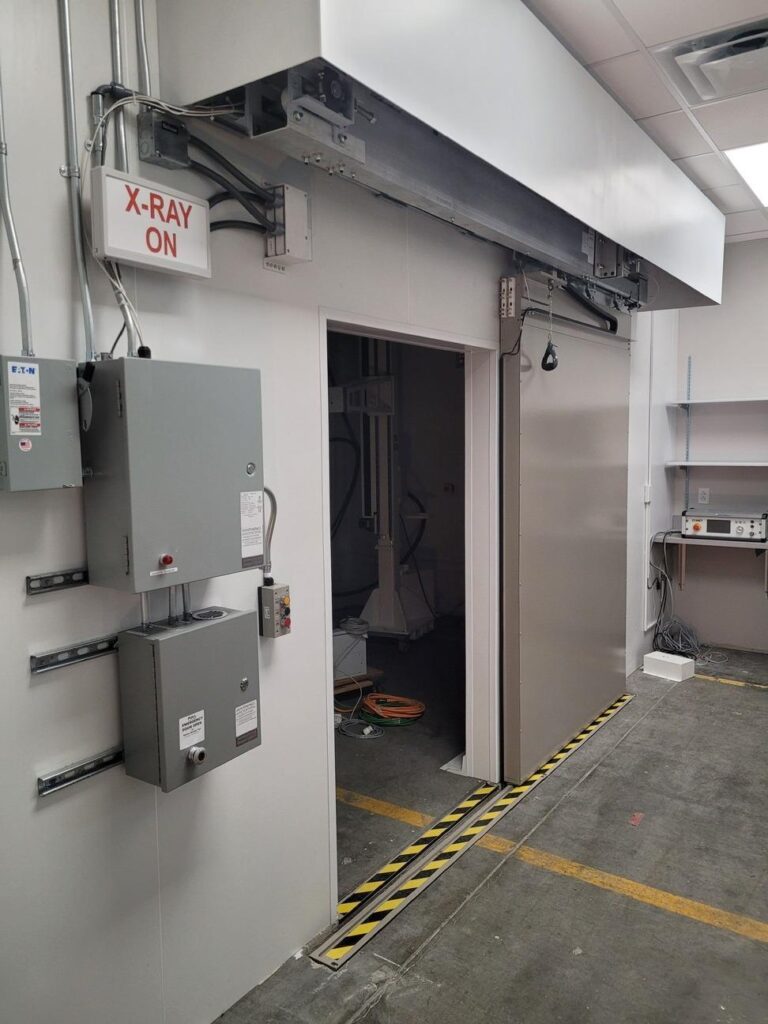
Sliding doors are a common choice for high-energy vaults and can be single-leaf or bi-parting. These doors can be installed below grade to eliminate the possibility of radiation streaming beneath the door. This is achieved either by using a lead‑lined tab that travels within a recessed foundation slot, or—on larger, heavily shielded doors—by incorporating an automated trench cover system. In the latter configuration, the trench cover rises into place when the door is closed to form a continuous shielding barrier and lowers when the door opens to provide a smooth bridge surface over the door‑travel trench.
Single Leaf: Is a single door that travels in one direction. It requires significant wall space to the side of the opening.
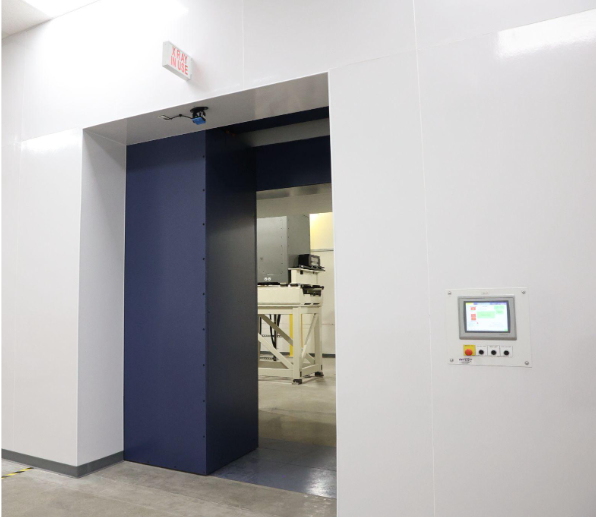
Bi-Parting: Two doors that are positioned on both sides of the opening meet in the middle. When space is limited and there is a very large opening, this door design is ideal.
Hinged Swing Doors
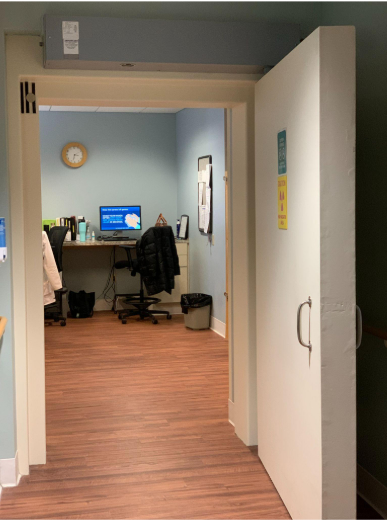
Swing doors are typically used when space for a sliding track is unavailable or impractical. However, they require a clear swing zone and heavy-duty hinges to support the weight of the shielding materials within the door. Swing doors inherently leave a clearance gap at the bottom, which can become a pathway for radiation streaming/leakage. To maintain proper shielding performance, additional design features must be incorporated to address this gap using lead‑lined threshold plates or below‑grade shielding elements that eliminate direct line‑of‑sight under the door.
Shielding Door Operation
Mechanical systems for controlling the radiation shielding doors and vaults can include touchscreens, vault and energy level monitoring systems, as well as other features that directly integrate into your facility management systems.
Power-Operated Doors
Heavy shielded doors require power for operation due to the heavy weight of the shielding materials and precise closing requirements in order to block radiation. Depending on the weight and speed requirements for your door, power-operated doors are typically moved via belt systems, ball-and-screw systems, pneumatic cylinders, or gear-driven systems.
Power-Operated Door Modes
Heavy-Shielded Powered Vault Doors
Heavy shielded power vault doors can be equipped with a “half‑open” operating mode, allowing the door leaves to open partway for quick personnel access without requiring a full travel cycle. This feature reduces wear on the drive system, shortens cycle time, and minimizes the exposure of the shielded opening while still providing safe, convenient entry and exit. The half‑open position is fully interlocked, ensuring the X‑ray system cannot be enabled unless the door is in a verified, fully closed, and secured state.
Manual Overrides 
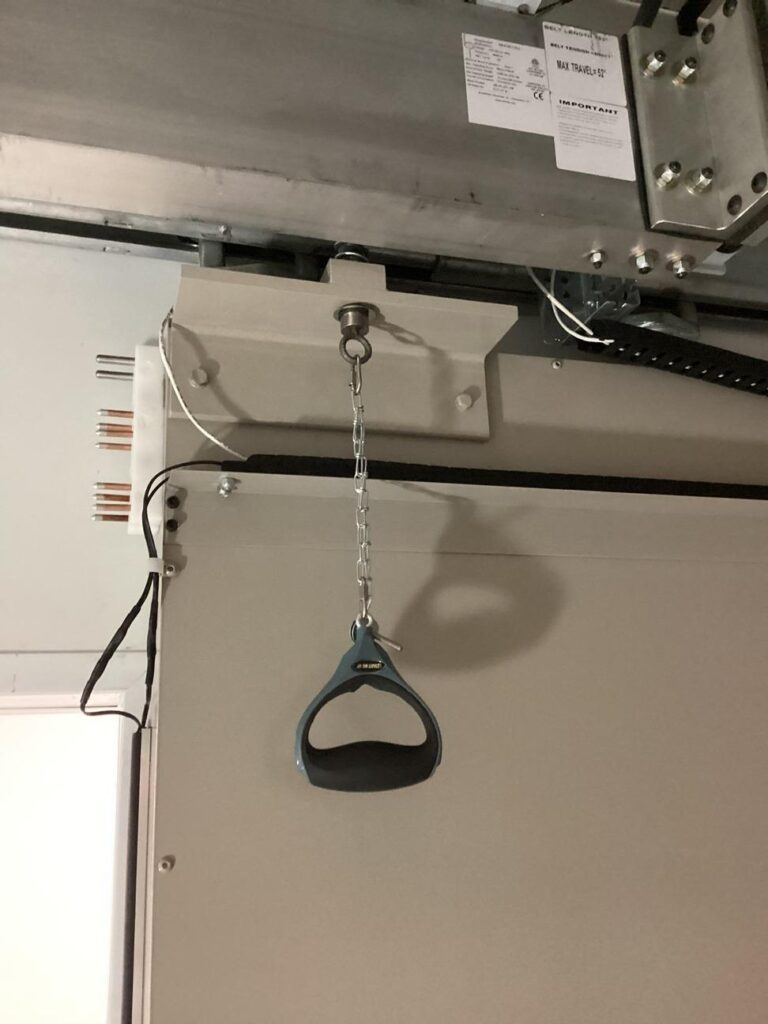
For safety, at least one door in the system has a manual emergency opening mechanism in the event of power failure (as shown in the picture).
Door Shielding Materials
The choice of material isn’t just about stopping radiation; the material can impact space management and has different shielding effects on different energy particle types. Here are common shielding materials and the applications in which they perform best.
- Lead and Steel: Common materials for Gamma and X-ray shielding. Steel plates are often used for durability and structural integrity. These materials can be used as shielding as well due to their naturally dense properties.
- High-Density Concrete: Standard concrete is generally 150 pcf, but high-density concrete typically starts at 220 pcf and can exceed 300 lbs per cubic foot based on the engineered mix design. If 2-foot-thick standard concrete is required, it can be reduced to 1 foot by increasing the concrete pcf.
- Borated Polyethylene (BPE): High-energy sources produce neutrons, which standard lead and steel cannot stop effectively. BPE is layered within the shielding solutions, including the door, to effectively prevent radiation leakage.
Radiation Safety and Regulatory Standards
NRC, NCRP, DOE, OSHA, FDA, DHS, and the local Department of State are among some of the most cited organizations that either regulate, set enforceable standards, or publish technical guidance used in the shielding design. Safety in radiation environments is the key to keeping operators, staff, and equipment protected from radiation. To meet safety standards, most facilities will need to include the following safety features:
- Door Bump Strips: These sense contact with anything in the pathway of the door. When triggered will stop and reverse the door immediately to prevent incidents or injury.
- Door Interlocks: Are mandatory for every vault. Interlocks are mechanisms that ensure the energy source cannot activate unless the shielding doors are confirmed closed and shut it down if the door is prematurely opened.
- Area Scanners and Light Curtains: These electronic sensors can confirm that the area is clear and will prevent door motion if an obstruction is sensed in the areas being monitored.
- Interior E-Stops: These are emergency stop buttons, generally wall-mounted within operator reach, that will immediately shut down the radiation source in case of emergency.
- Door E-stop: This will halt all door motion when activated to prevent accidents and injuries.
- Audible and Visual Alerts: The application of each door may require additional audible and visual indications, such as X-ray on signs, lights, and audio alarms. These are used to notify staff and personnel that a radiation source is turning on or in process.
- Last‑person‑out systems: Ensure the vault is empty before X‑ray activation. The final person exiting must acknowledge the area is clear—typically by pressing an exit confirmation button or using a keyed switch sequence—before the door can secure and the system can be enabled. This provides a simple, reliable safeguard against accidental exposure to a person left in the room.
Maintenance and Long-Term Performance Factors
A radiation door is designed to last, but its mechanical components can experience wear and damage. To ensure that the shielding properties stay stable regardless of use and wear throughout the lifespan of the door, consider the following:
- Cycle Counts: Maintenance schedules are often based on how often the door opens. A high-throughput NDT facility will need more frequent inspections than a low-volume research lab.
- Hardware Wear: The shielding itself within the door doesn’t degrade, but drive belts, sensors, and control batteries or internal components can, so it’s important to inspect these regularly for wear to prevent failures or unexpected issues.
- Alignment: Given the extreme weight of many shielding doors, even a slight shift in the foundation of the space can affect door alignment. Regular checks on tracks and hinges are essential to prevent radiation leakage and misalignment issues with the mechanical components.
AVM Group provides every vault and shielded door system with a comprehensive operation and maintenance manual detailing all required service procedures and preventative maintenance schedules. The manual outlines routine inspections, lubrication points, mechanical adjustments, safety‑interlock checks, and long‑term service intervals to ensure reliable performance and extend the life of the shielding system. By supplying a complete, system‑specific maintenance program, AVM Group helps facility operators maintain compliance, minimize downtime, and protect their investment over the full service life of the vault.
How AVM Group Approaches Engineered Shielding Solutions
At AVM Group, our process is built on creating a technical partnership with our clients. We offer full-service solutions, from pre-design through final inspection. We provide full physics reports for every facility, or if your facility has physicists already, we can work directly with them to utilize their energy report and design a tailored shielding door solution. Whether you need a hinged swing door or a large bi-parting sliding door with a below-grade trench and full vault, our team works with yours to engineer a solution that meets your specifications.
Get a Radiation Door Specification Consultation
Don’t let the door be an afterthought in your vault design. AVM Group can provide the engineering expertise and design for a radiation shielding door system that meets safety codes and standards, all while integrating seamlessly with your facility’s workflow.

