




MatterGuard®

Dry Room Construction

Controlled Environment System

Trusted by

About MatterGuard® Dry Rooms

For Temperature and Humidity Control

If your business makes hygroscopic or moisture-sensitive products, you understand the need to precisely control conditions during the manufacturing process. AVM Group has decades of experience designing, building, installing, and supporting custom dry rooms of any square footage for any application.

Dry rooms use dehumidifiers and specialized HVAC systems to keep humidity levels low. AVM Group’s proprietary MatterGuard® dry rooms can achieve 0.5% humidity at 68 degrees, and are completely self-contained and vapor-tight. 

Common Dry Room Industries

Dry Room Features and Specifications

DRY ROOM INTEGRITY & CONTAINMENT

The envelope is built to limit moisture at seams, penetrations, and transitions—because small leaks will keep you from holding dew point.

OPERATION & USE

Airlocks, workflows, and access points are planned to limit moisture introduced during personnel movement and material transfer.

CONSTRUCTION MATERIALS

Materials and sealing details must limit moisture ingress over time or the room will not maintain performance.

Seismic / Structural

Structural design keeps the room sealed and stable so building movement or vibration does not degrade performance.

MatterGuard® Product Specifier

Input your requirements to generate a system configuration aligned to dew point, room size, and process demands.

What sets MatterGuard® Dry Rooms apart

Protect with precision. Customize for your needs. Install with confidence.

Predictable Room Performance

Dew point, load, and infiltration are resolved during design so the room performs as specified without relying on constant tuning.

Validation Without Surprises

Validation requirements are addressed early so certification does not expose design or integration gaps after installation.

Built Around Your Process

The room is designed around your equipment, workflows, and material movement so operation does not fight the environment.

MatterGuard® Dry Room Components

Dry rooms consist of the envelope, the mechanical system(s), and the control system.

We have a thorough design build process for every dry room project. We meet with you to understand your business operations, space requirements, and how strictly you need to regulate environmental factors such as humidity, temperature, and air quality. Then, our team of experts designs a dry room just for you, from scratch.

Dry Room construction company

1

Dry Room Envelope

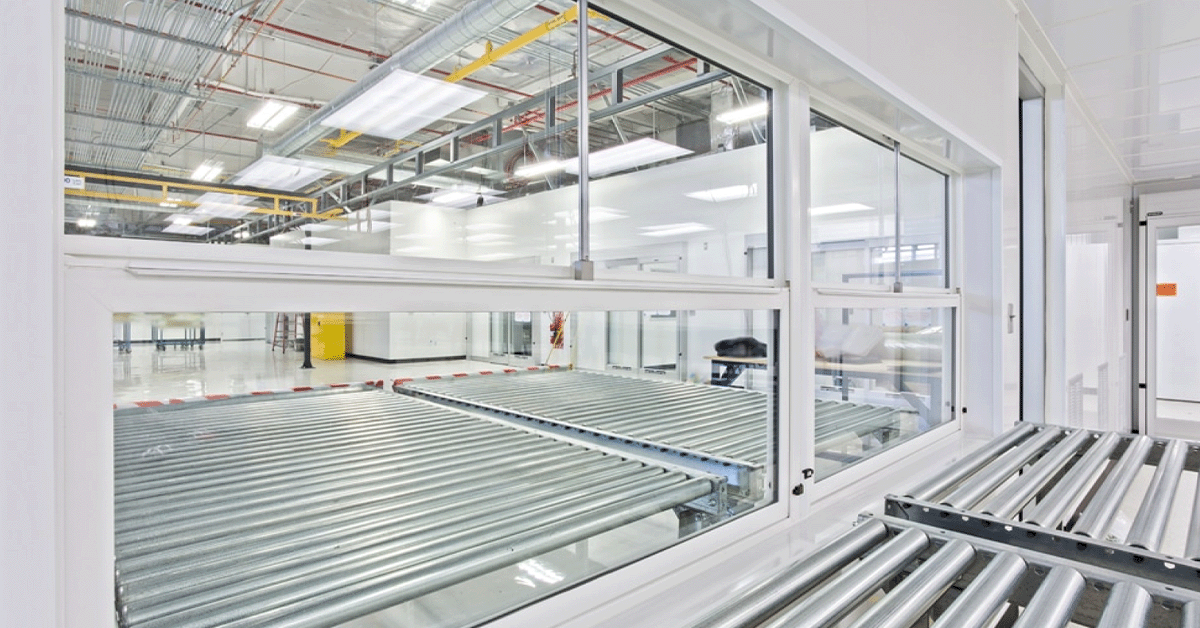
The envelope prevents infiltration across walls, ceilings, doors, and other penetrations. When properly designed, the dry room envelope will mitigate small leaks which compound quickly and prevent the room from holding target dew point.

2

Dry Room Mechanical Systems

Mechanical units which include desiccant dryers, condensing units, chillers, and exhaust fans, perform the work to heat, cool and dehumidify the dry room. Each piece of equipment is sized to actual moisture load and building interaction, not just room size. Undersized systems drift, oversized systems create control instability.

3

Dry Room Logic

Our MatterLogic is the “brain” behind the dry room’s critical conditioning and humidity requirements. With continuous monitoring via room-side measurements, it tells the mechanical equipment when and how hard to work or shut-down as needed to maintain the temperature and humidity specified for the dry room. 

Our Dry Room Process

Each MatterGuard® system is built for your specific needs

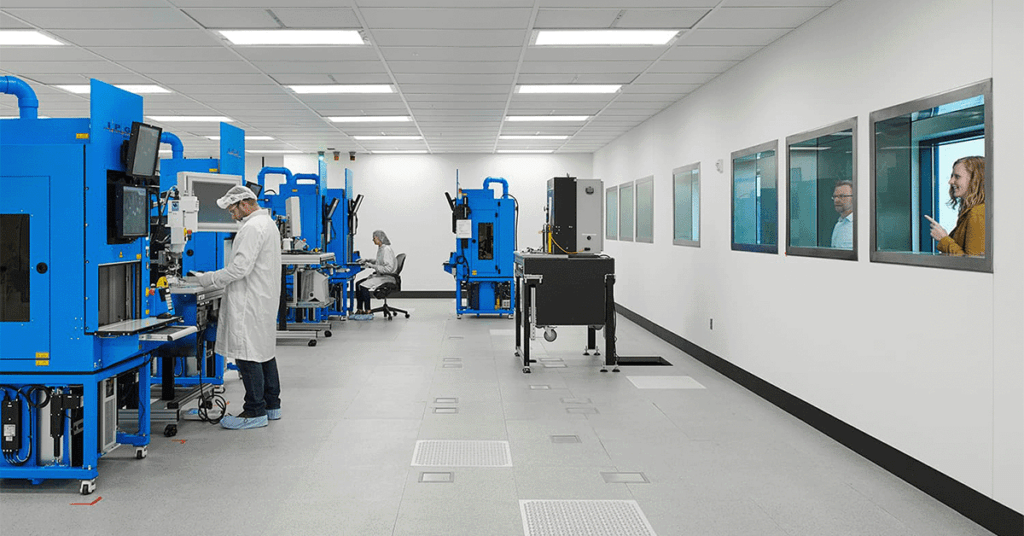
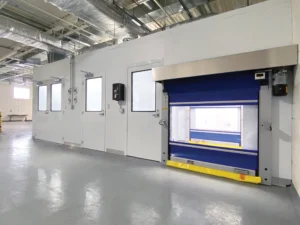
Inside of a Dry Room used for manufacturing

PROJECT ASSESSMENT

We define requirements based on your process, equipment, space, moisture sources, and target dew point.
Humidity Controlled Room

ENGINEERING & DESIGN

The system is engineered before pricing so load, layout, and integration are resolved before the project moves forward.
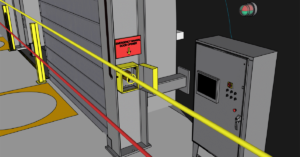
Radiation Shielding Design

PRoject review

Scope, layout, and performance targets are locked before procurement so nothing is left open to interpretation.
AVM Careers Header Image

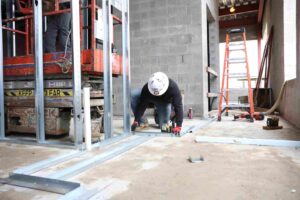
FABRICATION & INSTALLATION

Installation follows engineered plans with controlled sequencing—field improvisation and design gaps are where most failures start.
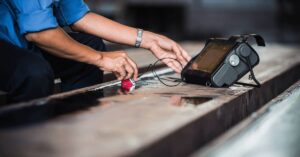
UT Ultrasonic to detect imperfect in welding of steel structure

COMMISSIONING & SUPPORT

We verify performance under real conditions and stay involved through validation, adjustment, and ongoing use.

Why Partner with AVM Group?

Guaranteed Room Performance

We create custom solutions that allow you precise and repeatable control of your dry room environment.

Customization for Every Facility Type

We source high-quality materials and cost-effective components to create a unique solution tailored to your requirements.

In-House Design, Fabrication & Integration

Our extensive seven-step discovery, design and proposal process works through every detail of your systema and guarantees alignment with your project needs and goals.

Expert Support From Design to Maintenance

From concept to startup to commissioning and beyond, our team prioritizes customer support at every step.

What Our Partners Are Saying

Real results from our clients

Our Satisfied Customers include

Have Other Questions?

We’re happy to talk through your project needs. Give us a call today.

Dry Room FAQS

Most applications have dew points that fall between -20°C and -60°C, but the correct target depends on exposure time, material limits, and what happens if moisture gets in. Lower isn’t always better—it increases cost and system complexity without necessarily improving results.
Most failures come from infiltration and incorrect moisture load assumptions. Leaks at doors, penetrations, and transitions add moisture faster than the system can remove it, and systems are often sized for room volume instead of actual load from people, material movement, and process equipment.
Yes, many dry rooms are built within existing spaces. The challenge is integration—pressure relationships, utilities, structural constraints, and how the room connects to surrounding areas all affect performance. These factors need to be addressed early in the design.
Timelines vary by size and complexity, but most projects require several months for design and engineering, followed by several months for fabrication and installation. Projects with undefined requirements typically take longer due to adjustments during installation or validation.
The starting point is room size, target dew point, process equipment, and how the space will be used. From there, the system is designed around moisture sources, including people, material flow, infiltration, and process load. Without that, the system is based on assumptions, which leads to performance issues.

Ready to Get Started?

Let our expert sales team guide you through design and budgeting for your project. You’ll receive a comprehensive and accurate quote at no cost.